Neurotoxins, Dermal Fillers & Thread lifts

lip augmentation

Lip Augmentation

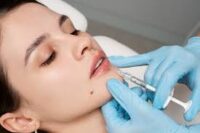
Lip Augmentation: Achieving Natural Results with the Perfect Ratio & Injection Technique Lip augmentation is one of the most frequently requested and, unfortunately, one of the most visible procedures when performed incorrectly. The goal of modern lip aesthetics is not to create volume for volume’s sake, but to restore or enhance the natural, harmonious contours of the mouth.The shift is away from the ‘overfilled’ look and toward natural rejuvenation guided by classic anatomical and mathematical principles. For an expert injector, this requires an artistic eye combined with precision technique and a deep respect for facial proportions. The Golden Ratio (1:1.6): Your Aesthetic Compass While every face is unique, the concept of the Golden Ratio (Phi approx 1.618) provides an aesthetic starting point for achieving harmonious results. In the context of the lips: Vertical Proportion: The lower lip should be approximately 1.6 times larger than the upper lip. The Pitfall: Overfilling the upper lip to be equal to or larger than the lower lip is the number one cause of an unnatural, ‘duck-like’ appearance. Horizontal Proportion: The width of the lips should ideally align with the inner edges of the iris or the pupillary line. The Profile View: The upper lip should project slightly more than the lower lip when viewed from the side, supporting the subtle curve of the Cupid’s bow. 2. Anatomical Precision: Understanding the Lip Sub-Units Effective lip augmentation involves treating specific anatomical sub-units, not just the entire vermillion border: The White Roll The sharp border between the red lip and the skin. Treating this area defines the lip and corrects minor wrinkling, but excessive filling here causes projection. The Vermillion Body The main red body of the lip, where most volume is added to create pout and hydration. The Cupid’s Bow & Philtral Columns These should be preserved and enhanced, not obscured. Precise, conservative filler placement is key to maintaining a natural curvature. The Oral Commissures Treating the corners of the mouth can correct a ‘down-turned’ smile, which requires both filler for support and often a small amount of Botox to relax the depressor muscle. Injection Techniques for Natural Results. Different goals require different techniques. A cookie-cutter approach guarantees an unnatural result. Linear Threading – Define borders and fill static lines- Vermillion border, minor wrinkles.  Micro-Bolus -Create support and projection -Deep in the lip body for ‘pout’ or along the philtral columns.  Cannula Technique – Reduce bruising and swelling -Used to inject the deeper body of the lip from entry points near the commissures.  Tenting Technique -To “flip” the lip border outwards gently -Along the subcutaneous layer of the upper lip.  learn more about advanced injectable courses Natural lip augmentation is an investment in training. It requires moving beyond simply injecting a syringe to developing the artistic discernment necessary to honor the patient’s individual anatomy and the mathematical principles of beauty. When done correctly, the result is a subtle enhancement that appears harmonious and youthful, not “done.” Ready to master the artistry of injectable aesthetics? Join IAMAC Institute’s Comprehensive Lip Augmentation Workshop for intensive training on the Golden Ratio, safe anatomical techniques, and hands-on practice with live models.


Lip Augmentation Read More »

exosomes

PRP and Exosome Therapy

Regenerative Aesthetics: The Future of Skin Quality with PRP and Exosome Therapy For decades, aesthetic medicine primarily focused on two things: paralyzing muscle movement (toxins) and restoring lost volume (fillers). While effective, the new frontier is Regenerative Aesthetics—treatments that harness the body’s own power to repair, heal, and rebuild collagen, elastin, and healthy tissue.This shift from ‘filling’ to ‘healing’ is led by two powerhouse treatments: Platelet-Rich Plasma (PRP) and the cutting-edge Exosome Therapy. For any physician aiming to offer the most sophisticated anti-aging protocols, regenerative medicine training is now essential.1. Platelet-Rich Plasma (PRP): Harnessing Your Own Growth FactorsPRP has become a staple in high-end aesthetic practices. It is a therapy where a patient’s own blood is drawn and spun in a centrifuge to separate and concentrate the platelets. This plasma is rich in powerful growth factors (e.g., PDGF, TGF-beta, VEGF).Key Applications of PRP: Skin Rejuvenation (The “Vampire Facial”): When microneedled or injected into the skin, PRP triggers a massive, natural cascade of collagen and elastin production, improving texture, tone, and fine lines. Hair Restoration: Injected into the scalp, PRP can stimulate dormant hair follicles, slowing hair loss and promoting new growth. Under-Eye/Tear Trough: PRP can safely improve dark circles and crepiness in this delicate area without the risk of filler-related lumps or migration. 2. Exosome Therapy: The Next-Generation Messenger Exosomes are the newest and arguably most powerful tool in the regenerative arsenal. They are tiny, cell-derived vesicles—essentially microscopic messengers—released by stem cells. They carry lipids, proteins, and RNA to other cells, signaling them to repair and regenerate. The Power Upgrade: While PRP contains growth factors, Exosomes contain exponentially more of the genetic material and signaling molecules necessary for deep cellular repair. Superior Cell-to-Cell Communication: Applied topically after microneedling or injected, exosomes instruct skin cells to behave like younger, healthier cells, leading to more profound and faster results in collagen production, wound healing, and pigment reduction. Ethical Sourcing: Exosomes used in aesthetics are typically derived from ethically-sourced, controlled mesenchymal stem cells. know more about exosome here 3. Integrating Regenerative Protocols into Practice The beauty of regenerative aesthetics is its versatility and synergy with other treatments PRP/Exosomes + Microneedling: Creates micro-channels that allow the regenerative material to penetrate deeply for maximum efficacy. PRP + Filler/Lasers: Can be used alongside filler to improve the quality of the surrounding skin, or immediately after a laser treatment to speed up healing and reduce downtime. Long-Term Skin Health: Unlike temporary treatments, PRP and Exosomes train the skin to function better, offering long-lasting improvements in skin quality, scar appearance, and hair density. Ready to master the science of cellular repair? Regenerative aesthetics is the future. Patients are increasingly searching for non-toxic, natural-based treatments that focus on true biological change rather than temporary camouflage. By adding PRP and Exosome therapy to your practice, you are positioned at the cutting edge of anti-aging science. Enroll in IAMAC Institute’s Advanced Regenerative Aesthetics Course to gain hands-on expertise in PRP preparation, advanced injection techniques, and the latest in Exosome protocols.

PRP and Exosome Therapy Read More »

injectors

Why Injectors Must Master the ‘Danger Zones’

The Foundation of Safe Aesthetics In aesthetic medicine, the adage holds true: You must know the anatomy to treat the patient safely. The field is evolving rapidly, with sophisticated techniques demanding a level of anatomical understanding that goes far beyond basic training. For a physician transitioning into aesthetics, mastering the complex vascular, nerve, and muscle structures of the face is not just a competency—it is the single most critical factor in preventing adverse events, from bruising to life-altering complications like vascular occlusion(V.O.). At IAMAC Institute, we believe anatomical mastery is the bedrock of ethical and effective practice. Identifying the ‘Danger Zones’: Knowledge is Prevention The ‘Danger Zones’ of the face are areas where critical blood vessels (arteries and veins) and nerves are located superficially or in predictable pathways, making them highly susceptible to accidental injection or trauma. The Glabella/Forehead The proximity of the supratrochlear and supraorbital arteries makes this area a high-risk zone for V.O. leading to skin necrosis or even blindness. Precise, superficial injection or careful deep placement is essential. The Nasolabial Fold While common to treat, the deep course of the angular artery requires careful aspiration and technique to avoid V.O. The Temporal Region The superficial temporal artery and underlying structures make this a challenging area for volume restoration, demanding the use of blunt cannulas and knowledge of the safest tissue planes. The Alar/Nasal Area The dorsal nasal artery and its connection to the retinal artery make non-surgical rhinoplasty one of the riskiest procedures if performed incorrectly. The Critical Role of Vascular Mapping  Knowing the typical pathways isn’t enough; variations in anatomy are common. Advanced injectors must employ techniques that help confirm anatomical location Aspiration critical step before any injection to confirm the needle tip is not within a vessel, although it is not a foolproof guarantee. Ultrasound (The Gold Standard) Increasingly, advanced training involves using ultrasound devices to literally map a patient’s vessels in real-time, allowing for a personalized safety plan before the needle or cannula enters the skin Depth and Tissue Plane Awareness Understanding which layer of tissue (dermis, subcutaneous, supraperiosteal) the product should be placed to achieve the desired effect while avoiding major vessels. Anatomy for Artistic Results: Beyond Safety Anatomical knowledge doesn’t just prevent errors—it optimizes outcomes. A deep understanding of muscle attachments, fat compartments, and ligamentous structures allows the injector to Achieve Natural Movement: By treating muscles (Botox) or lifting ligaments (Fillers) strategically, the injector can restore volume without creating an unnatural, “overfilled” appearance. Target the Source of Aging: Knowing that facial aging often involves the deflation and descent of fat compartments allows the injector to focus on structural support (e.g., zygomatic arch) rather than just treating lines. ‘Danger Zones’ and confidently deliver exceptional results. Ready to build your practice on a foundation of safety and expertise? Explore IAMAC Institute’s Comprehensive Anatomy and Advanced Injector Courses and secure your spot in our next session.

Why Injectors Must Master the ‘Danger Zones’ Read More »

exosome

How exosomes work

The Exosome Frontier: Is This Regenerative Power Really the Future of Aesthetic Medicine? The Buzzword That Demands Credibility – Exosomes ​In the world of aesthetics, every year brings a new “miracle” treatment. But seldom does a technology emerge with the scientific pedigree and regenerative potential of Exosomes. If you’re a practicing clinician, you know your patients are asking: “Are exosomes really effective, and how exactly do they work?” ​The answer, backed by a growing body of clinical literature, is complex, exciting, and demands a deeper look at the mechanism of cellular communication. The Science of Exosomes What are Exosomes, and How Do They Work? Forget large cells or traditional growth factors. Exosomes are tiny, nano-sized vesicles—effectively, micro-messengers—released by stem cells. Think of them as envelopes packed with specific instructions:​The Cargo: They carry potent molecules like lipids, proteins, peptides, and microRNAs.​The Mission: When applied to damaged skin (via microneedling, laser, or injection), they communicate with your body’s resident skin cells (fibroblasts and keratinocytes), instructing them to accelerate repair, reduce inflammation, and produce more collagen and elastin.​This targeted delivery is what gives them significant efficacy in areas like scar revision, reducing inflammation (acne/rosacea), and, most notably, in skin rejuvenation and reducing the signs of photoaging. The Clinician’s Protocol: How is Exosome Treatment Done? The efficacy of Exosome treatment hinges almost entirely on proper delivery and technique. Since Exosomes are designed to be absorbed deep into the dermis, simply applying a serum on the surface is usually insufficient for optimal results. ​A qualified professional typically uses Exosomes in combination with: ​Microneedling: Creating thousands of micro-channels allows the Exosomes to penetrate the skin barrier and reach the targeted fibroblasts beneath the surface. ​Post-Laser Application: Immediately following ablative laser treatments, the skin is highly receptive, allowing for maximum absorption of the regenerative cargo. ​Injections (Varies by Region/Product): For targeted tissue regeneration, sometimes direct injection into the skin is performed. ​Crucially: Understanding the source of the Exosomes, the concentration, and the delivery depth is paramount to achieving predictable, ethical results. Click here Your Practice Demands Expertise in the New Frontier. Ready to elevate your skills and lead the regenerative trend? The future of aesthetic medicine is in regenerative treatments. To offer Exosome therapy safely and effectively—and to confidently answer your patients’ most complex questions—you need specialized, certified training.​Our advanced certificate program delves into the cellular mechanisms, clinical protocols, and best practices for next-generation treatments like Exosomes. View Our Certified Exosome Treatment Course Curriculum Today

How exosomes work Read More »

threadlifts

Safe and Effective Thread Lifts

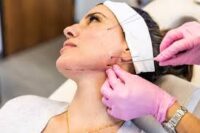
Anatomical Mastery for Safe and Effective Thread Lifts Thread lifts have revolutionized minimally invasive facial rejuvenation, offering patients an alternative to surgical facelifts with shorter downtime. For medical practitioners, however, success depends entirely on deep anatomical knowledge. Understanding the relationship between skin, fat compartments, ligaments, and underlying muscles ensures safe, precise, and natural results. Key Anatomical Structures: Anatomy Facial Ligaments: These act as primary anchor points. Knowledge of the zygomatic, mandibular, and lateral temporal ligaments helps in positioning threads for maximum lift without over-tensioning. Fat Compartments: Superficial and deep fat layers influence both volume and lift. Misplaced threads can cause hollowing or irregular contouring, particularly in the mid-face and jawline. Nerves and Blood Vessels: Awareness of branches like the infraorbital, mental, and facial arteries prevents serious complications such as bruising, paresthesia, or vascular compromise.  Vector Planning and Depth Control Thread vectors must align with natural facial tension lines. Improper angles can cause unnatural pull, asymmetry, or distortion of expressions. Depth is equally critical: superficial placement risks extrusion or visibility under thin skin, whereas deep placement may fail to lift or damage vital structures. Clinical Insight Every patient’s anatomy differs based on age, ethnicity, and previous procedures. For instance, older patients often have mid-face fat atrophy and skin laxity, requiring longer threads and altered vector planning. Combining anatomical expertise with hands-on experience allows doctors to customize lifts, ensuring balanced, natural, and long-lasting outcomes.  Takeaway For doctors, anatomical mastery is non-negotiable. It transforms thread lifts from a routine aesthetic procedure into a precision-driven art form, maximizing patient safety, results, and professional credibility.   Join our courses to know more

Safe and Effective Thread Lifts Read More »

threads

Thread Lifts with Fillers, Botox, and Skin Treatments

Integrating Thread Lifts with Fillers, Botox, and Skin Treatments: A Holistic Approach for Doctors Thread lifts are highly effective for repositioning sagging tissues and providing subtle lifting. However, optimal facial rejuvenation requires a multi-modal approach. For doctors, understanding how to integrate thread lifts with fillers, neuromodulators, and skin treatments ensures natural, balanced, and long-lasting results. Complementary Treatments and Their Roles Fillers: Address volume loss in mid-face, cheeks, and jawline. Can enhance the lifting effect of threads by supporting underlying structures. Example: In a patient with mid-face sagging and sunken cheeks, combining a PDO thread lift with hyaluronic acid fillers restores contour and improves skin support. Botox and Other Neuromodulators: Relax dynamic facial muscles that cause wrinkles and expression lines. Reduces tension on thread lifts, preserving the longevity and natural look. Example: Injecting Botox in the lower face before a jawline thread lift can prevent excessive downward pull from active muscles.  Skin Treatments (Lasers, Microneedling, PRP): Improve skin texture, firmness, and elasticity. Stimulate collagen and enhance thread lift results. Example: Fractional laser treatment before or after a thread lift can improve skin tightening and overall facial rejuvenation.  Clinical Insights for Doctors: Treatment Sequencing: Proper sequencing is critical. Threads are usually placed first to reposition tissues, followed by fillers to restore volume, and Botox to manage dynamic lines. Skin treatments can be scheduled before or after, depending on the modality. Patient-Specific Planning: Age, skin quality, muscle activity, and degree of sagging determine the combination and timing of treatments. Each patient requires a customized plan to avoid overcorrection or unnatural outcomes. Safety Considerations: Combining treatments requires awareness of anatomical landmarks, vascular risks, and potential interactions between procedures. For instance, injecting fillers too close to thread anchoring points can compromise thread lift results. Get hands on in these techniques Practical Tips: Document vectors, filler placement, and injection sites for integrated planning. Start with conservative approaches and adjust based on tissue response. Educate patients about staged treatment plans, recovery timelines, and expected outcomes.  Click here to know more

Thread Lifts with Fillers, Botox, and Skin Treatments Read More »

Scroll to Top
Dany Williams

Dany Williams

Typically replies within an hour

I will be back soon

Dany Williams
Hey there 👋
It’s your course counselor. How can I help you
WhatsApp