Hair Transplantation & Trichology (FUE Mastery) Fellowships n& Master Courses
Enter the most rapidly growing segment of aesthetic medicine. This comprehensive Fellowship is designed to transform licensed medical practitioners into expert hair restoration surgeons, combining deep diagnostic knowledge (Trichology) with advanced surgical techniques (FUE/DHI).
The Integrated Advantage: Trichology Meets Technology
Successful hair restoration is not just surgery—it is a medical, artistic, and technical discipline. Our integrated curriculum ensures you can diagnose the root cause of hair loss and execute state-of-the-art surgical solutions.
Clinical Trichology & Diagnosis
- Hair Loss Etiology: In-depth study of Androgenetic Alopecia (Male & Female Pattern), Alopecia Areata, Cicatricial Alopecias, and Effluviums.
Diagnostic Tools: Interpretation of Trichoscopy (Dermatoscopy), Trichogram analysis, and biopsy reading.
Non-Surgical Management: Developing protocols for PRP/PRF, Growth Factor Concentrate (GFC), Mesotherapy, and Low-Level Laser Therapy (LLLT).
Pharmacological Management: Prescribing and managing patients on Minoxidil and Finasteride/Dutasteride.
Advanced FUE & DHI Surgical Techniques
Donor Management: Calculating Donor Density, managing the ‘Safe Donor Area,’ and minimizing transection rates.
Painless Anesthesia: Mastering regional blocks for tumescence and achieving complete patient comfort.
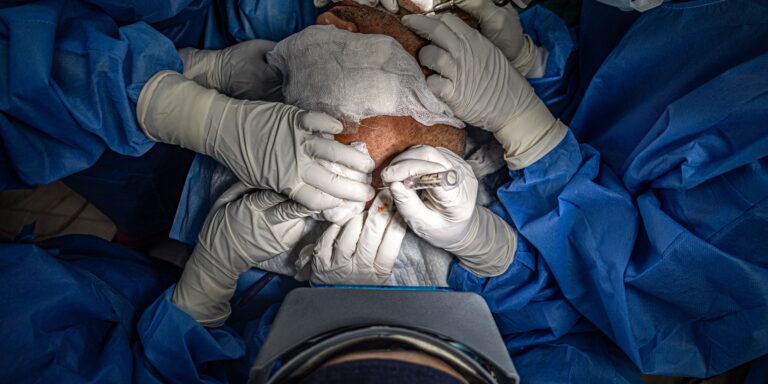
Extraction Perfection: Hands-on practice with motorized punches (0.7mm–1.0mm), learning proper angulation and depth for minimal scarring and maximum graft yield.
Recipient Site Creation: Mastering slit/channel creation using custom-sized blades for optimal density and natural direction.
Direct Hair Implantation (DHI): Specialized training in the use of implanter pens for graft placement, allowing for denser packing and minimal graft handling.
Specialized Cases & Complication Management
Body Hair Transplant (BHT): Techniques for using beard or body hair as supplementary donor sources.
Aesthetic Restoration: Eyebrow, Moustache, and Beard hair transplant protocols.
Managing Difficult Cases: Dealing with previously failed transplants, managing white dots (micro-scarring), and dense packing techniques.
Complication Protocols: Handling post-operative edema, folliculitis, and managing rare vascular complications.
Who Should Enroll?
This program is essential for doctors with a medical degree (MBBS, MD, MS, MDS) who are committed to a career in hair restoration. No prior surgical experience is required, but a commitment to mastering delicate, high-precision micro-surgical skills is mandatory.
Admission Requirements & Document Checklist
Eligibility: Open to Non-Medical Graduates, Beauty Therapists, Cosmetology Trainees, Nursing Assistants, and Skill Development Seekers.
Required Documents for Verification:
Scanned color copy of 10th & 12th Marksheets
Last Education Certificate / Marksheet / Medical Registration
Identity Proof (Identity Card / Passport / Official ID)
Latest Passport Size Photograph
Document verification turnaround: 1 working week. Class access enabled within 30 days of registration.
Frequently Asked Questions (FAQs)
What is the Masters in Hair Transplantation & Aesthetic Trichology course?
The Masters in Hair Transplantation is a comprehensive surgical fellowship designed to transform medical practitioners into skilled hair restoration surgeons. The curriculum seamlessly integrates clinical trichology diagnosis with advanced surgical execution, focusing on Follicular Unit Extraction (FUE) and Direct Hair Implantation (DHI) [1].
Who is eligible to enroll in this surgical fellowship?
This program is designed for registered medical practitioners holding a recognized medical degree (MBBS, MD, MS, MDS, or equivalent) who wish to build a high-volume hair restoration practice or expand their clinical offerings [1].
What surgical techniques and modules are covered in the training?
The fellowship provides comprehensive coverage across three core pillars:
Advanced FUE & DHI Surgical Execution: Motorized punch extraction (0.7mm–1.0mm), tumescent painless anesthesia blocks, slit/channel creation, and high-density graft placement using implanter pens [1].
Clinical & Diagnostic Trichology: Trichoscopy analysis, scalp biopsy interpretation, and non-surgical therapies including PRP, PRF, Growth Factor Concentrate (GFC), Mesotherapy, and pharmacotherapy [1].
Specialized Restoration & Body Hair Transplants: Beard and moustache restoration, eyebrow reconstruction, Body Hair Transplants (BHT), and revision/repair of failed transplants [1].
Does the course include hands-on surgical practice?
Yes. IAMAC prioritizes practical surgical proficiency. Candidates receive intensive hands-on training covering donor area mapping, harvesting, recipient site creation, graft handling, and placement under expert surgical supervision [1].
Do I need prior hair transplantation or surgical experience before joining?
No prior surgical experience in hair transplantation is required [1]. The curriculum is structured to guide practitioners step-by-step from foundational micro-surgical principles and hairline design to advanced automated extraction and dense packing techniques [1].
ADMISSIONS & CONTACT
Apply today for the upcoming FIA cohort or request detailed prospectus and fee structure options.
 Clinical Campus Address: 1st Floor, Royal Business Hub, Chaudi, Canacona, Goa – 403702
Table of Contents
Toggle